
 Chinese

 Current Location:
-
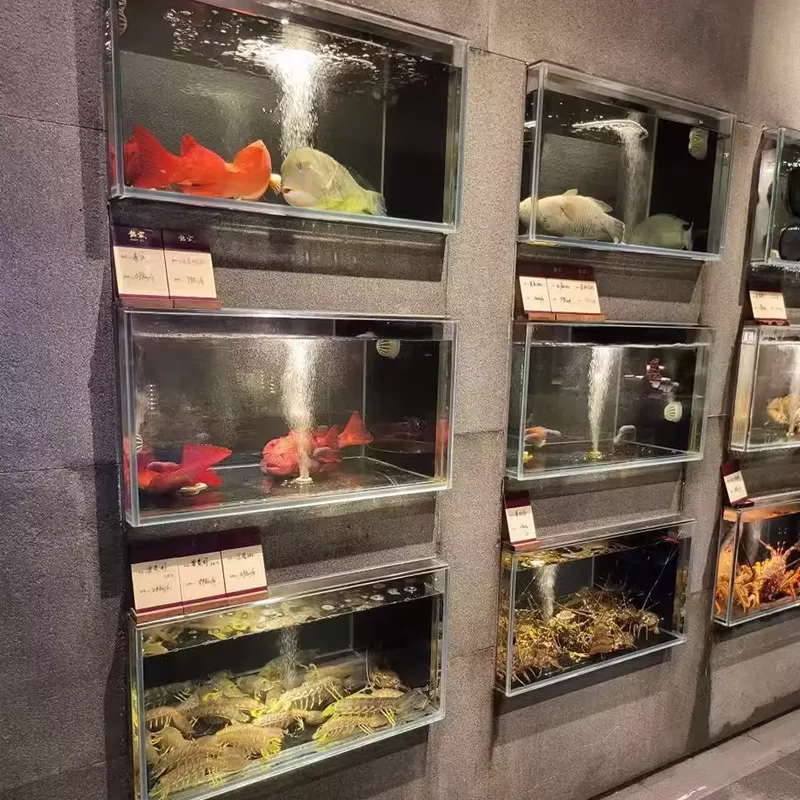
How can customized fish tanks meet the needs of seafood display and breeding in the catering industry
-
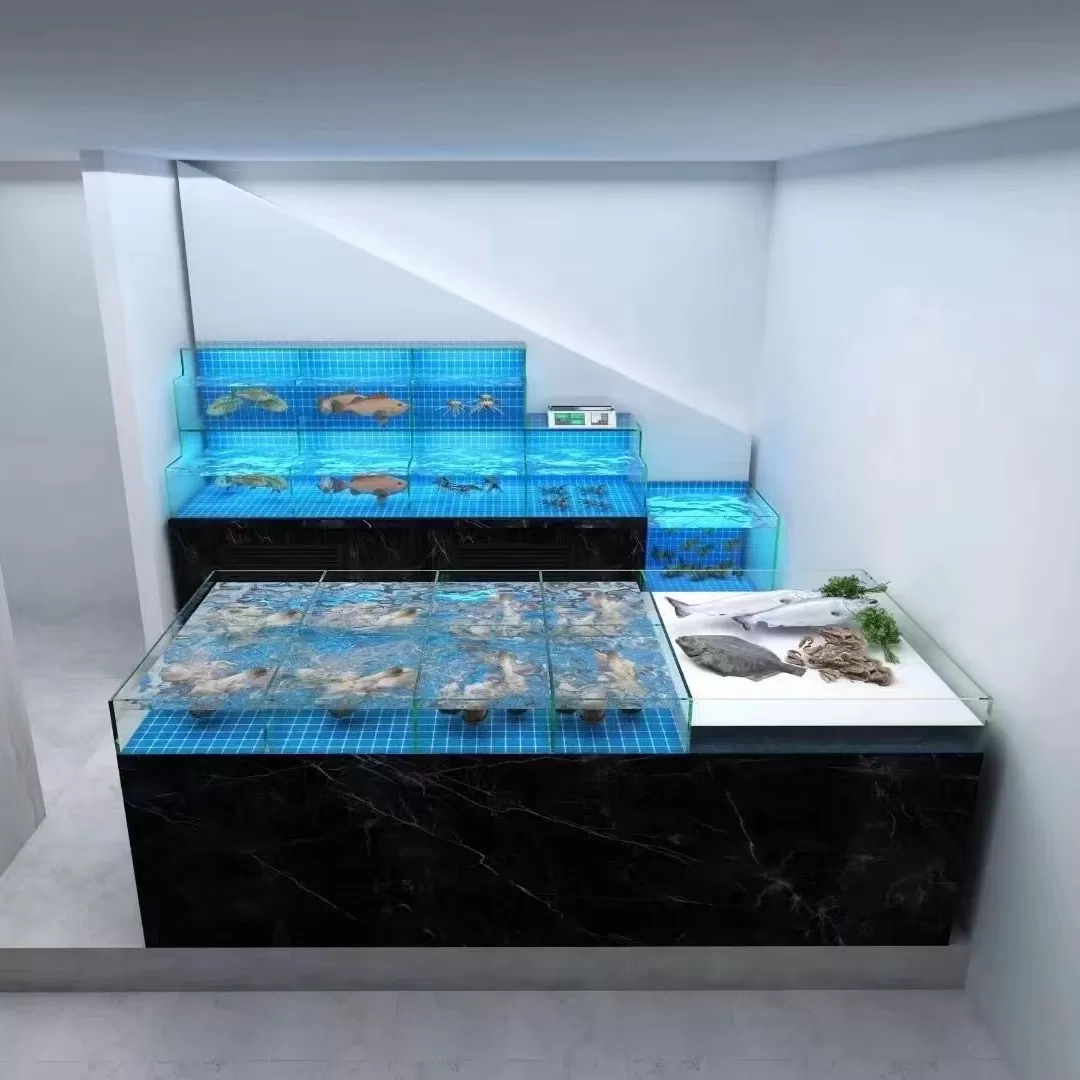
How to plan a customized fish tank? A Guide to Avoiding Pitfalls in the Design and Selection of Seafood Tanks for Catering
-
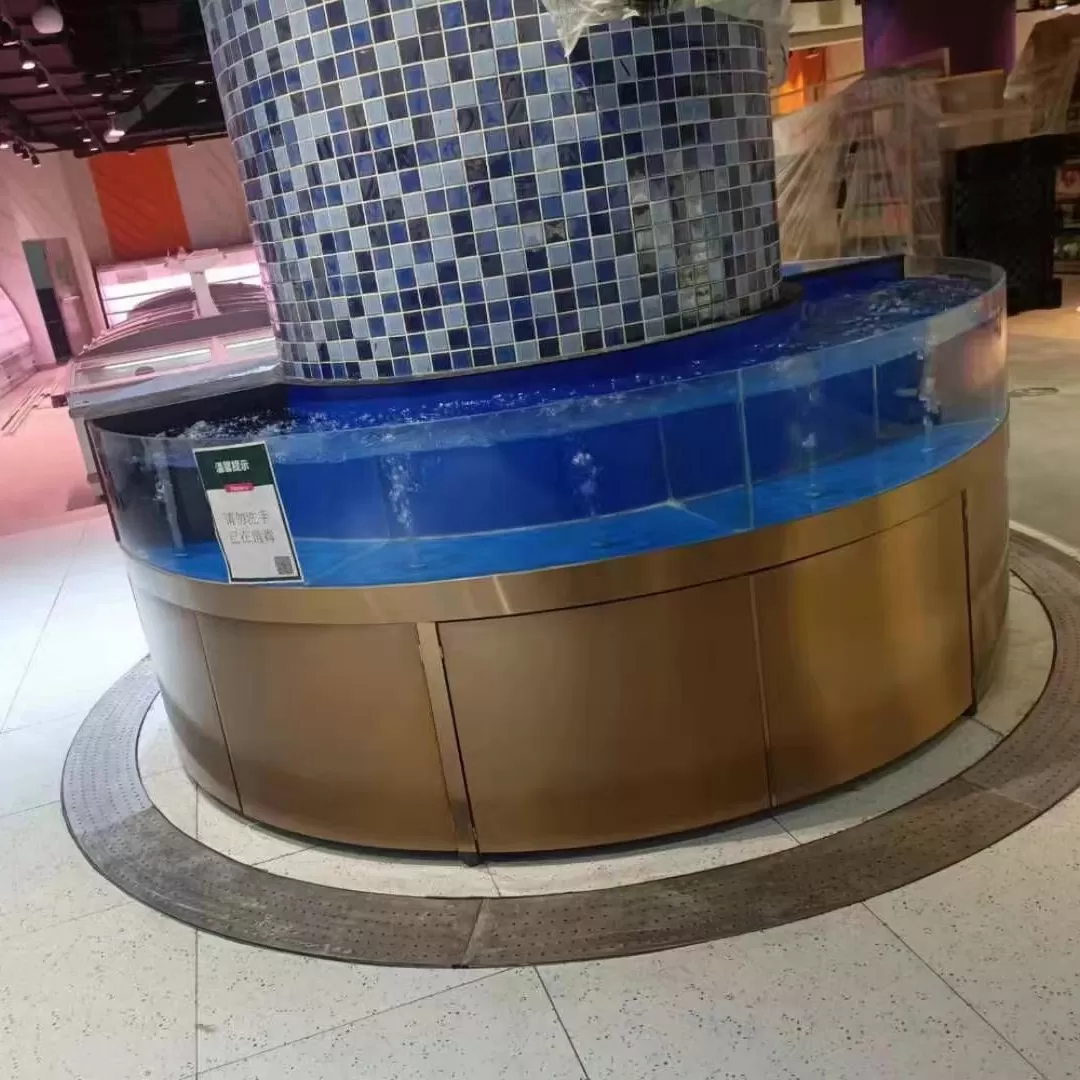
Column-wrapped arc-shaped stainless steel catering and aquaculture seafood tank: An integrated solution for commercial space column renovation and high-density aquatic product temporary breeding
-
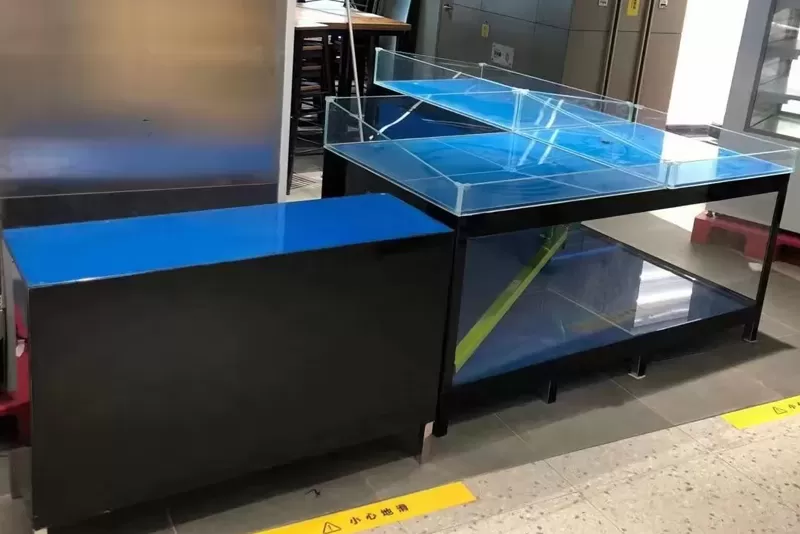
How can customized fish tanks solve the problem of corner Spaces in restaurants? Design Guide for High and Low Stratified Seafood Tanks
-
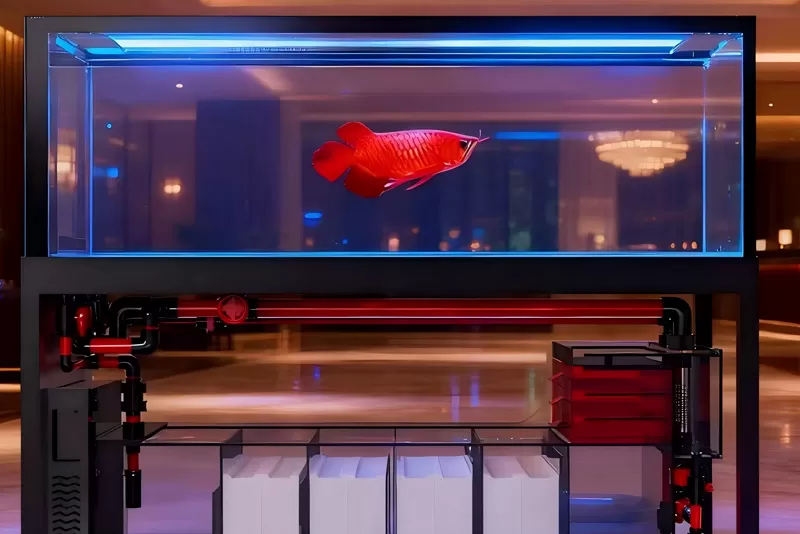
Customized Guide to Large Bottom Filter Red Dragon Fish Tanks: Structural Design and Water Circulation System Analysis
-
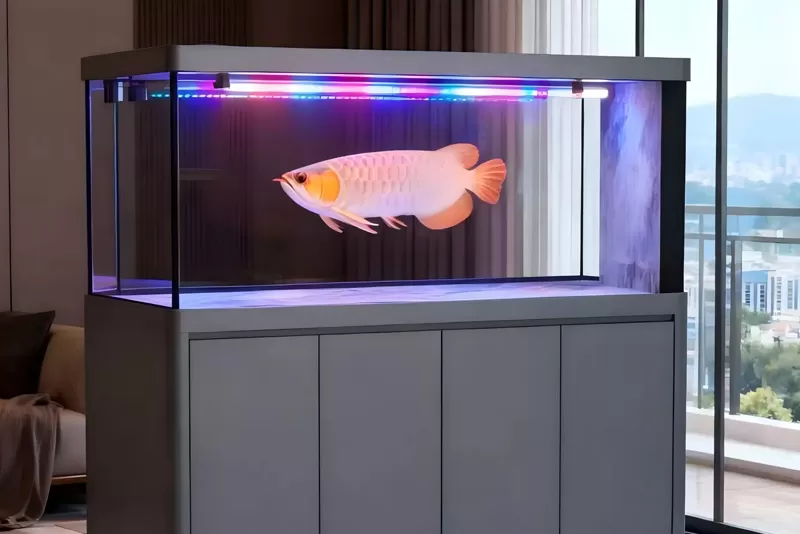
A minimalist grey four-door dragon tank aquarium selection guide and bottom filter system maintenance tutorial

Online consultation
If you have any questions, please contact our online customer service staff immediately
Why do restaurants choose custom-made fish tanks? Analysis of the Design of Seafood Breeding Tanks
 Click:26
  Time:2026-08-18 16:55:58
  Author:艺景水族
Many restaurant owners encounter such a situation when planning the seafood area: the size of the ordinary fish tank does not match the on-site layout, the variety of seafood cannot be effectively classified after increasing, the noise of the equipment operation affects the dining environment, and the later cleaning and maintenance are also rather troublesome.
These issues indicate that the fish tanks used in catering are not ordinary decorative items, but a commercial aquarium system that combines display and breeding functions.
Therefore, more and more restaurants, hotels and seafood business premises choose to customize fish tanks, creating seafood display equipment that meets their business needs based on the actual space.
Professional fish tank customization needs to start from the usage scenarios, including multiple aspects such as space planning, seafood categories, water circulation systems, and later management methods.
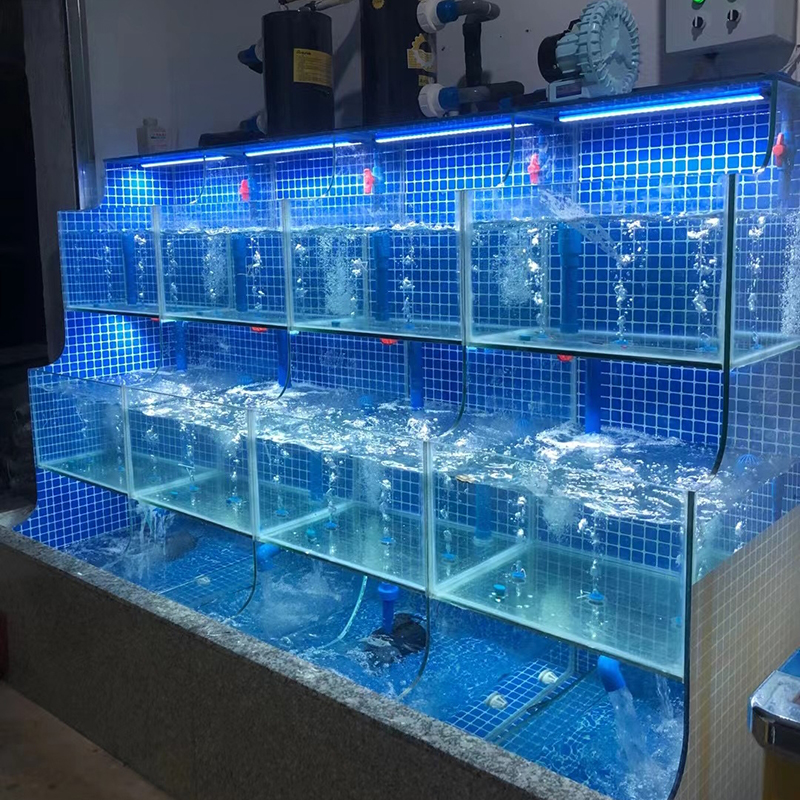
Why do seafood tanks in restaurants need to be custom-designed?
Dining Spaces usually have obvious differences.
Among seafood restaurants, some need to display seafood at the entrance to attract customers, some need to temporarily keep seafood in the kitchen to improve supply efficiency, and others need to build a large seafood display wall.
If standard products are used directly, the following problems are likely to occur:
Insufficient space utilization
Fixed dimensions cannot fully utilize walls, corners or special areas.
It is difficult to classify seafood
Fish, shrimp and shellfish have different environmental requirements and need to be reasonably classified.
Later maintenance is not convenient
If the layout of filtration equipment and pipelines is not planned in advance, it will increase the difficulty of maintenance.
The advantage of customizing a fish tank lies in its ability to solve these problems in advance.
What factors should be considered in the design of seafood breeding tanks?
A mature commercial seafood tank solution usually needs to take the following points into consideration
Design the environment based on the types of seafood
Different kinds of seafood have different requirements for water temperature, oxygen and water flow.
For example:
- Shrimp and crabs require stable water quality and reasonable activity space.
- Shellfish require a suitable water flow environment.
- Fish need sufficient swimming areas.
Therefore, when designing a seafood farming tank, it is necessary to first determine the main types of fish to be farmed.
2. Plan capacity based on the business model
Many customers believe that the larger the capacity, the better, but in actual operation, it is necessary to take into account the daily sales volume.
A fish tank that is too large may increase equipment investment and maintenance costs, while one that is too small cannot meet the display requirements.
Reasonable size is the key to commercial use.
3. Reserve maintenance space
Commercial fish tanks need to have their equipment operation status checked every day.
Filtration, replacement of consumables and equipment maintenance all need to be easy to operate. Therefore, the usage habits of the staff must be taken into consideration during the design stage.
The hierarchical structure makes the display of seafood more efficient
In the catering scene, stratified breeding tanks have strong practicality.
By dividing different areas, various kinds of seafood can be displayed simultaneously while reducing mutual influence.
For example:
- The upper layer is for customers to watch.
- The middle layer is used for classified storage.
- The lower layer hides the filtering device.
This structure not only improves the space utilization rate but also facilitates daily management.
For restaurants with limited space but a desire to showcase a wider variety of seafood, a layered design is a relatively practical solution.
A good seafood tank should not only be beautiful but also stable
Some restaurants tend to focus too much on their appearance during the initial design stage.
In fact, for commercial seafood tanks that operate for long periods every day, stability is even more crucial.
The key factors influencing the user experience include:
- Efficiency of the filtration system
- Water temperature control capability;
- Noise control
- Cleaning convenience;
- Material durability.
Appearance determines the first impression, while system design determines the long-term usage effect.
Customized services need to be combined with actual project experience
Due to the complex catering environment, customizing fish tanks usually needs to be combined with the on-site conditions.
For example:
- Store decoration style;
- Circuit conditions;
- Drainage location;
- Customer viewing Angle;
- Later maintenance route.
A team with project experience can offer more reasonable suggestions from a practical operational perspective rather than merely providing an appearance plan.
The core purpose of the catering industry choosing custom-made fish tanks is not simply to create a large fish tank, but to establish a stable, beautiful and easy-to-manage seafood display system.
From spatial planning to stratified aquaculture, from water quality management to equipment maintenance, every detail will affect the final usage effect.
For hotels, restaurants and seafood business premises, designing professional seafood breeding tanks based on their own needs can simultaneously enhance the display value and operational efficiency.
- Previous Article:
- Next Article: How can customized fish tanks meet the needs of seafood display and breeding in the catering industry


 Tel: 13530938627
  Email: 360801901@qq.com
 Fax: 0755-23469932
 Address: Unit 1, Building 3, Xinji Industrial Park, Baoshi East Road, Guantian Community, Shiyan Subdistrict, Bao'an District, Shenzhen, Guangdong, P.R.China

 13682357508
 Home
Home Products