 Chinese

 Current Location:
-
How can customized fish tanks meet the needs of seafood display and breeding in the catering industry
-
How to plan a customized fish tank? A Guide to Avoiding Pitfalls in the Design and Selection of Seafood Tanks for Catering
-
Column-wrapped arc-shaped stainless steel catering and aquaculture seafood tank: An integrated solution for commercial space column renovation and high-density aquatic product temporary breeding
-
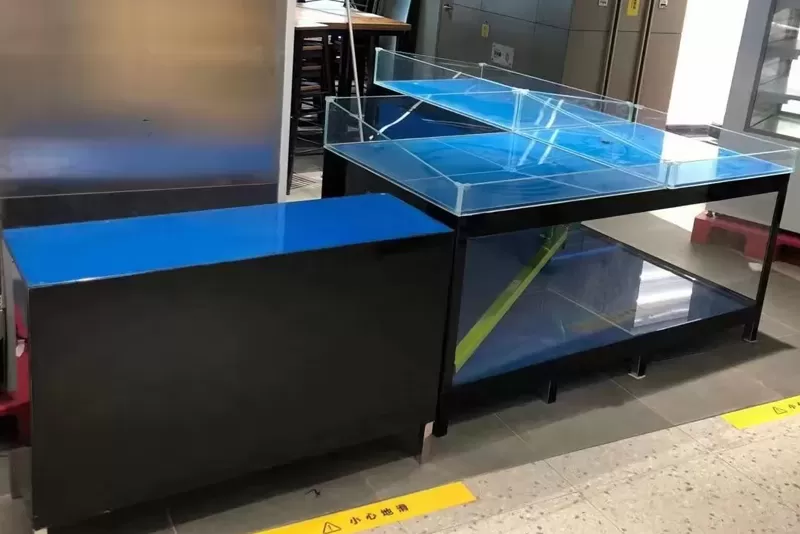
How can customized fish tanks solve the problem of corner Spaces in restaurants? Design Guide for High and Low Stratified Seafood Tanks
-
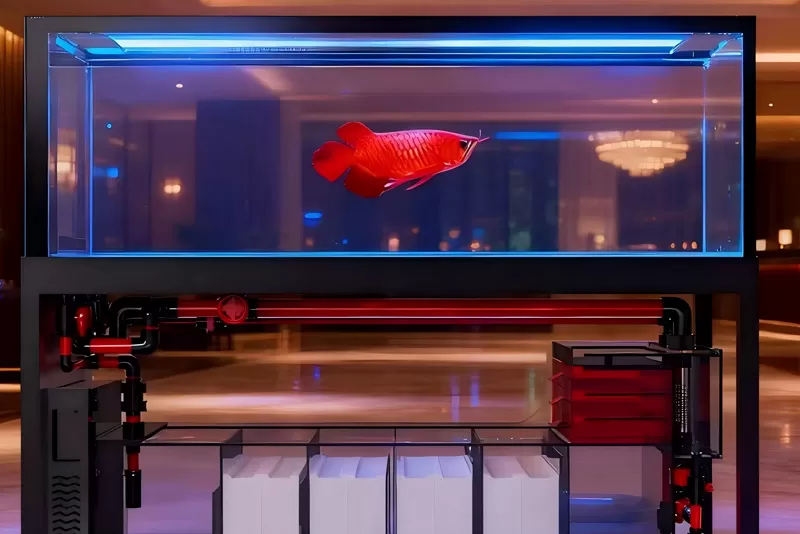
Customized Guide to Large Bottom Filter Red Dragon Fish Tanks: Structural Design and Water Circulation System Analysis
-
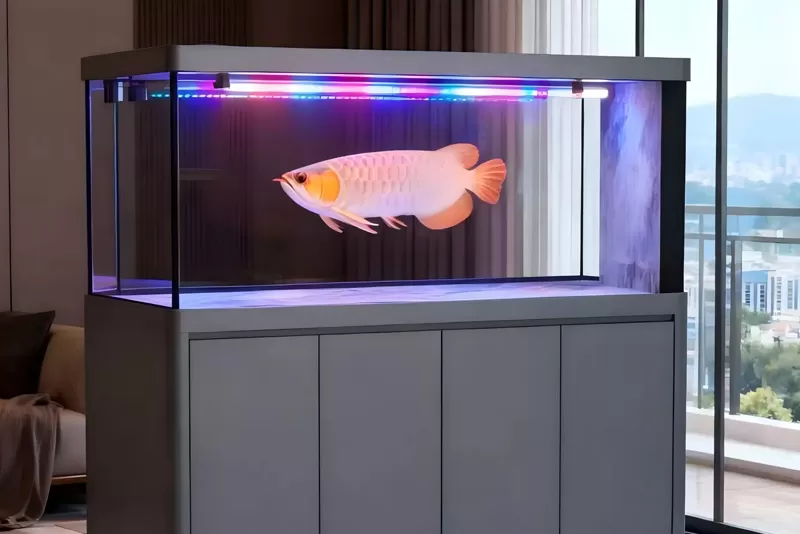
A minimalist grey four-door dragon tank aquarium selection guide and bottom filter system maintenance tutorial

Online consultation
If you have any questions, please contact our online customer service staff immediately
Customized Guide to Large Bottom Filter Red Dragon Fish Tanks: Structural Design and Water Circulation System Analysis
 Click:117
  Time:2026-07-21 15:43:41
  Author:Yijing Aquatics‑Custom Aquarium Manufacturer
Large red arowanas (such as Super Red Arowana and Hot Girl Red arowana, etc.) as high-end ornamental fish with huge body size, powerful swimming posture and extremely sensitive water quality, put forward extremely high requirements for their living environment. Ordinary ready-made fish tanks often fail to meet the space requirements, load-bearing safety and water quality stability of red arowanas during their growth cycle. Therefore, customizing a professional arowana tank, from the physical structure to the water quality circulation system, is the core prerequisite for ensuring that the red arowana has good coloration and a healthy body.
This article will systematically disassemble the technical key points and implementation norms of customizing large bottom filter red dragon fish tanks from dimensions such as load-bearing frames, glass material selection, flow channel planning of the bottom filter system, and noise reduction and overflow prevention details.
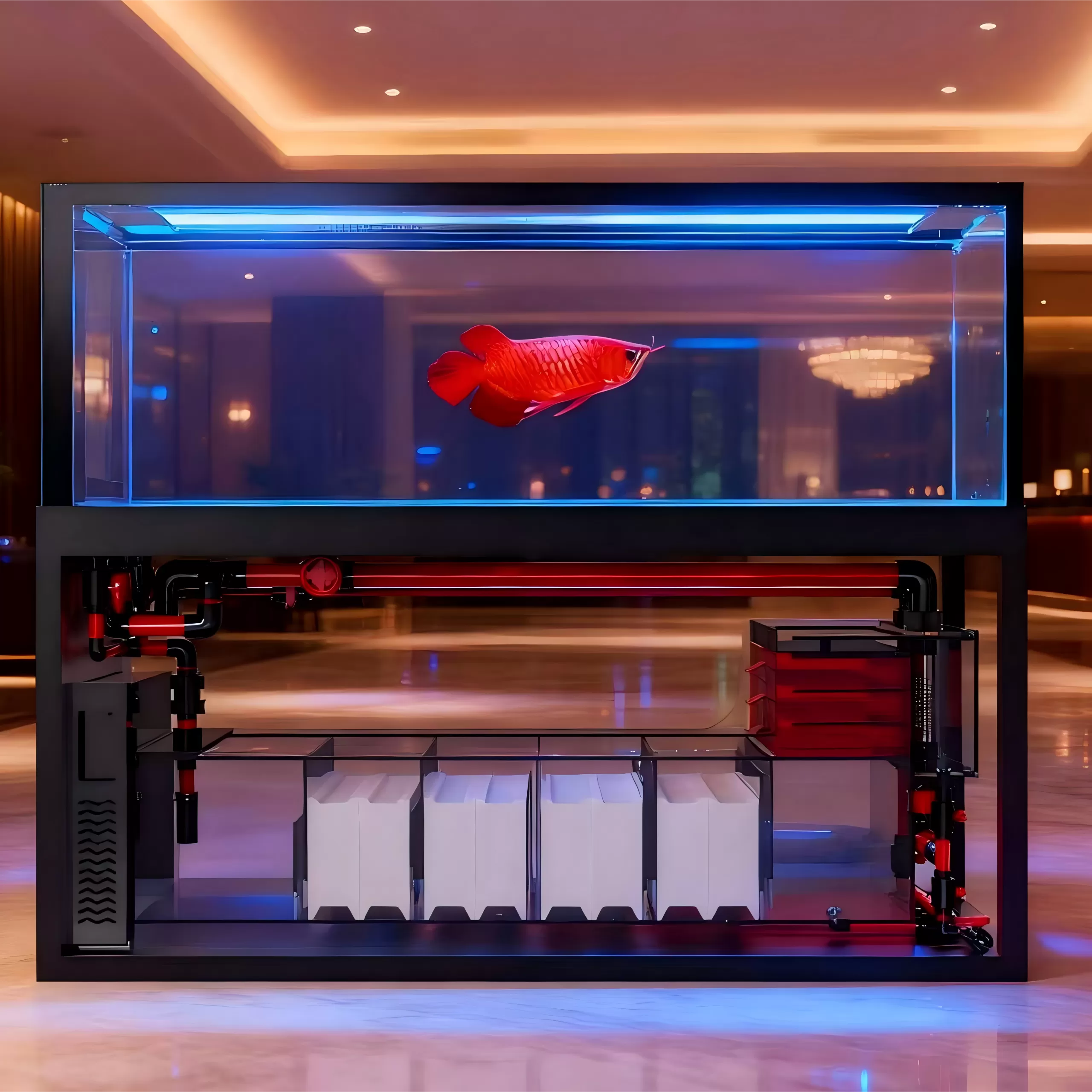
Large red dragon fish tanks are usually huge in size (with a length typically ranging from 1.8 meters to over 3 meters and a water depth of 0.7 meters to 0.8 meters), and when filled with water, their overall weight can reach 1.5 tons to over 3 tons. Structural safety is the primary consideration in the customization process.
1. Load-bearing steel frame and cabinet structure
Material standard: It is recommended to use national standard 304 stainless steel square tubes or thickened hot-dip galvanized steel pipes (with a wall thickness of no less than 2.5mm) to prevent the bottom frame from rusting and corroding due to a humid environment.
Stress dispersion design: The underframe should adopt a "multi-column + inclined support" layout, and the junctions of the crossbeams should be fully welded and ground flat. Lay high-density multi-layer solid wood boards of 18mm or more on the top and insert 8-10mm high-density EVA shock-absorbing pads to ensure uniform force distribution at the bottom of the glass and prevent it from cracking due to minor deformations.
2. Selection of cylinder block glass and jointing process
Application of ultra-clear glass: It is recommended that the entire tank use 15mm to 19mm double-sided ground edge automotive-grade ultra-clear glass, with a light transmittance of over 91.5%, which can truly reproduce the red pigment color and luster of the red dragon fish scales.
Glue and force calculation: Use professional structural silicone sealant from Wacker of Germany or of equivalent grade. Large fish tanks are subject to significant water pressure. The thickness of the glue joints should be precisely controlled within 2.5mm to 3mm, and it is necessary to ensure that there are no bubbles or broken glue during the gluing process. After completion, a full curing period of at least 14 days is required before water injection testing.
Ii. Professional Bottom Filtration System Design: Creating a long-term and stable water quality ecosystem
Water quality is the lifeblood of farmed red arowana. The bottom filter system, with its huge filter material volume and highly efficient physical and chemical filtration capacity, has become a standard configuration for high-end arowana fish tank customization.
【 Schematic Diagram of Water Flow Circulation
Main tank overflow zone (bottom water inlet + top overflow) ➔ dry-wet separation box (physical filtration) ➔ biological filtration tank (nitrifying bacteria culture) ➔ equipment/sedimentation tank ➔ water pump reflux to the main tank
1. Dual inlet overflow zone design (solving sedimentation and oil film issues)
Red arowanas have a large amount of excrement and an oil film is prone to form on their body surface. The traditional single-inlet water mode is very likely to create dead corners in water quality.
Upper overflow oil film removal: The comb-shaped upper overflow outlet can quickly pull the surface water film, remove the protein oil film, and increase the dissolved oxygen content of the water body.
Bottom water intake and sludge removal: The bottom water intake gap is closely attached to the bottom of the tank. Combined with the reasonable wave-blowing and sludge removal layout in the main tank, the fish manure accumulated at the bottom can be promptly sucked into the filter tank.
2. Multi-stage bottom filter chamber arrangement and filter material distribution
The design of the bottom filter tank should follow the principle of "physical first, then biological, dry-wet separation", and is usually divided into four functional areas
Filtering hierarchy |
Core function |
It is recommended to configure the filter material |
The first cabin: dry-wet separation cabin |
Intercept large particles of fish droppings and leftover feed to reduce the burden on underwater filter materials |
3-5 layers of magic carpet/magic Clean cotton, paired with high-density rainproof boards |
The second chamber: Nitrifying organisms chamber |
Cultivate nitrifying bacteria to decompose ammonia nitrogen and nitrite |
Bacteria house, quartz balls, microporous ceramic rings (accounting for more than 50% of the bottom filter volume) |
The third cabin: Functional Sedimentation cabin |
Adjust the PH value and hardness of water quality, and settle fine suspended solids |
Olive leaf/volcanic stone (to soften water quality or slightly adjust acidity), or leave it empty as a sedimentation and sewage discharge area |
The fourth compartment: Equipment pump compartment |
Place the variable frequency water pump, heating rod and ultraviolet germicidal lamp |
Low-pressure variable frequency water pump, dual heating rod redundant system, submersible UV sterilization lamp |
Iii. Detail Experience and Technological Increment: Noise Reduction, Anti-overflow and Intelligent Control
An excellent customized solution for a dragon fish tank should not only meet the physiological needs of the fish, but also enhance the daily usage experience of users and the fault tolerance rate of the system.
1. Silent drainage and anti-overflow safety mechanism
Triple sewer pipeline: The sewer system should be designed as "main sewer pipe (with fine-tuning valve) + backup overflow pipe + silent exhaust pipe". By adjusting the main drain valve to form a siphonic state, silent operation without bubble sounds or falling water sounds is achieved (noise controlled below 35dB).
Power outage anti-overflow calculation: When planning the water level of the bottom filter tank, it is necessary to strictly calculate the water flow rate of the main tank flowing back to the bottom filter tank after a power outage (usually 2-3cm of water depth in the main tank), to ensure that the bottom filter tank has sufficient safe volume and eliminate the risk of water flooding the floor.
2. Automated and intelligent temperature control system
Temperature control redundancy design: Red dragon fish are extremely sensitive to water temperature changes (it is advisable to maintain it at 28℃-30℃). It is recommended to configure two sets of independently temperature-controlled titanium alloy heating rods, setting them as backups for each other to prevent a sudden drop in water temperature or excessive heating due to the failure of a single heating rod.
Automatic water change interface planning: In the early civil engineering planning of customizing a dragon fish tank, it is recommended to reserve a PPR water inlet pipeline and a PVC drainage pipeline at the rear of the tank body. Combined with a timing solenoid valve and a pre-installed water purification filter core, it can achieve a micro automatic water change of 5% to 10% per day, greatly reducing the maintenance labor cost.

 Tel: 13530938627
  Email: 360801901@qq.com
 Fax: 0755-23469932
 Address: Unit 1, Building 3, Xinji Industrial Park, Baoshi East Road, Guantian Community, Shiyan Subdistrict, Bao'an District, Shenzhen, Guangdong, P.R.China

 13682357508
 Home
Home Products